
Introduction
Buying a plot is different from buying a ready-to-move-in property. Since the land becomes the foundation for your future home or investment, choosing the right plot requires attention to its location, dimensions, surroundings, accessibility, and development potential. A well-selected plot can give you greater flexibility and long-term value.
Look at the Plot's Location
The location of a plot should match your purpose. If you are planning to build a home, consider whether the neighbourhood offers a peaceful environment and convenient access to schools, hospitals, shops, workplaces, and transportation.
For investment purposes, look at areas where residential development and infrastructure are expanding. A location with improving connectivity can have stronger demand in the future.
Check the Plot Dimensions and Frontage
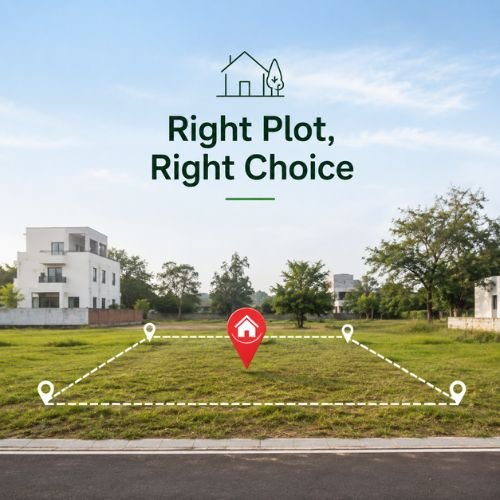
The size of the plot is only one part of the decision. Pay attention to its length, width, and road frontage. A plot with good frontage can provide better options for house design, parking, entrances, and landscaping.
Also check whether the plot dimensions are suitable for the type of building you intend to construct. A smaller plot with an efficient shape may sometimes be more practical than a larger plot with difficult dimensions.
Consider the Road Width and Access
Easy access is essential for both construction and daily use. Check the width of the road directly adjoining the plot and whether the approach road is properly developed.
Think about future construction requirements too. Construction vehicles, materials, and equipment will need sufficient access to the site. Good road connectivity can also improve the plot’s resale appeal.
Understand the Plot's Position
The position of a plot within a layout can make a difference. Corner plots, plots facing wider roads, and plots with good frontage may offer different advantages depending on your construction plans.
Before purchasing, understand the plot’s orientation, boundaries, neighbouring properties, and position within the overall layout. Choose a position that works well for your intended building design.
Check the Ground and Surroundings
Visit the plot instead of relying only on photographs or brochures. Observe the ground level, drainage, nearby buildings, vacant land, electricity infrastructure, and surrounding roads.
Check whether rainwater tends to collect in the area and whether the plot is significantly lower or higher than the surrounding roads. These factors can influence future site development and construction costs.
Verify the Layout and Land Documents
Before paying an advance, carefully verify the property’s documentation. Check the parent documents, title, encumbrance details, survey information, boundaries, and ownership records.
You should also confirm that the layout has the necessary approvals from the relevant authority. In Tamil Nadu, depending on the location and planning jurisdiction, buyers may need to verify applicable CMDA or DTCP approval.
Professional legal verification can help identify documentation issues before the purchase is completed.
Evaluate Future Potential
A plot can become more valuable as the surrounding area develops. Look for improvements such as better roads, transportation links, schools, hospitals, commercial centres, and employment opportunities.
At the same time, avoid making a decision based only on promises about future development. Consider developments that are supported by credible information and assess whether the current location already meets your basic requirements.
Conslusion
Choosing the right plot requires a land-specific evaluation rather than simply comparing prices. Pay attention to the plot’s dimensions, frontage, road access, position, ground conditions, documentation, construction suitability, and surrounding development. Take time to inspect the property and verify every important detail before making a commitment. With careful evaluation, you can select a plot that provides the flexibility to build your ideal property and the potential to become a valuable long-term asset.

Join The Discussion